How to Use Binance Exchange: A Beginner's Guide to Trading, Deposits, and Security

Binance is currently the world's largest cryptocurrency exchange by trading volume, offering a comprehensive platform for buying, selling, and trading digital assets. Founded in 2017 by Changpeng Zhao, Binance has grown from a simple crypto-to-crypto trading platform into a global ecosystem that includes spot trading, futures, staking, NFTs, and even a decentralized exchange (Binance DEX). Understanding what Binance is and how to use it is essential for anyone entering the crypto space.
At its core, Binance operates as a centralized exchange (CEX), meaning it acts as an intermediary between buyers and sellers. Users can deposit fiat currency (such as USD or EUR) via bank transfers, credit cards, or third-party payment services, or deposit cryptocurrencies directly from other wallets. Once funds are available, users can trade pairs like BTC/USDT or ETH/BUSD. Binance offers multiple order types—market orders, limit orders, and stop-limit orders—allowing traders to execute strategies according to their risk tolerance.
To start using Binance, the first step is to create an account. Visit the official Binance website or download the mobile app. Registration requires a valid email address and a strong password. After registration, you must complete identity verification (KYC) to unlock higher deposit limits and full platform features. This typically involves uploading a government-issued ID and a selfie. Once verified, you can navigate to the “Wallet” section to deposit funds. For beginners, the “Buy Crypto” feature is the easiest way to purchase cryptocurrency directly with fiat currency using a debit or credit card.
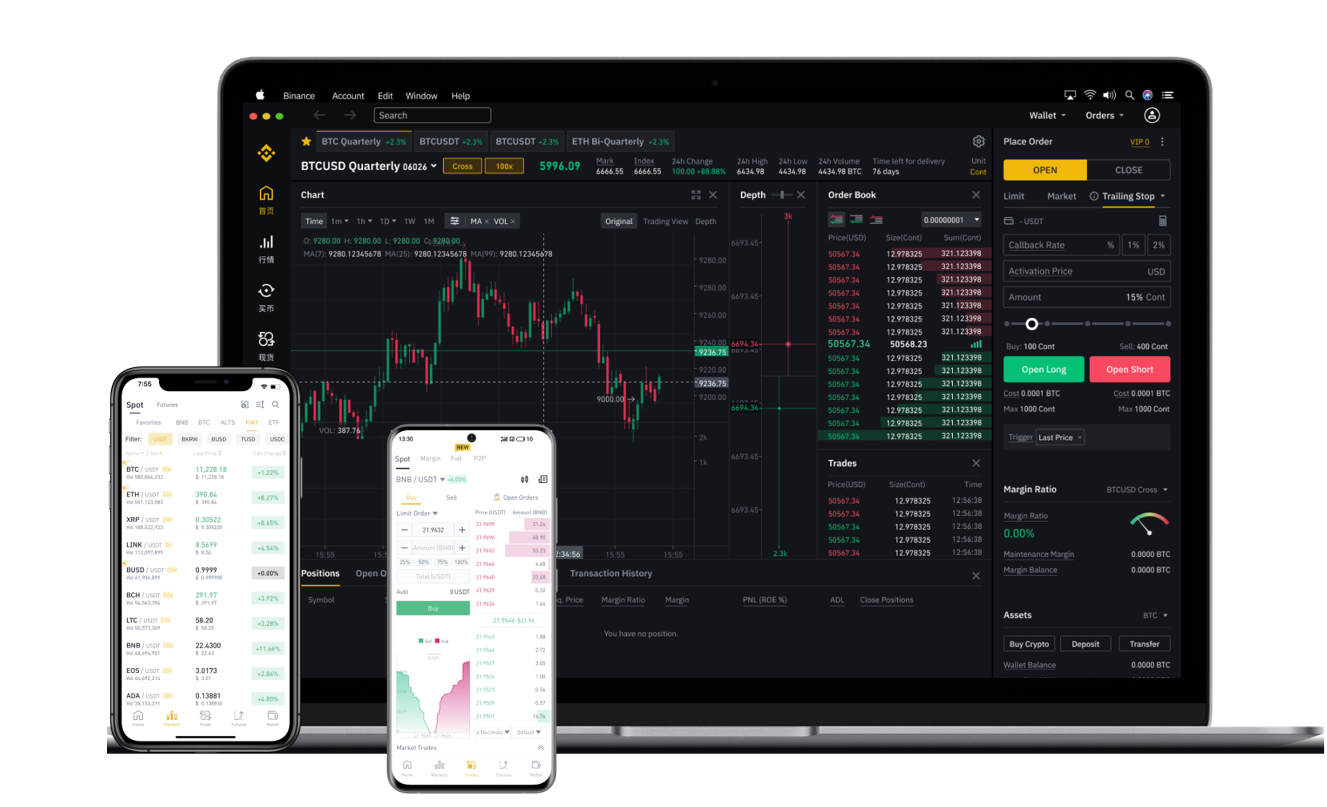
After funding your account, you can explore the trading interface. Binance offers a simplified “Lite” mode for beginners and an “Advanced” mode with detailed charting tools, order books, and technical indicators. For spot trading, select a trading pair, enter the amount, and choose an order type. Market orders execute immediately at the current price, while limit orders allow you to set a specific price. Binance also supports margin trading with leverage for more experienced traders, but this carries significant risk and is not recommended for beginners.
Beyond trading, Binance provides several additional services. The “Earn” section offers staking, savings accounts, and flexible or locked products where you can earn interest on idle cryptocurrencies. The “Launchpad” allows users to participate in new token offerings. For those interested in passive income, Binance Pool lets you mine cryptocurrencies by contributing hashing power. Additionally, Binance has a robust mobile app with built-in price alerts, portfolio tracking, and biometric security features.
Security is a critical aspect of using Binance. The platform enforces two-factor authentication (2FA) via Google Authenticator or SMS. Users should also enable withdrawal whitelist addresses and anti-phishing codes. Binance stores the majority of customer funds in cold wallets that are not connected to the internet. However, like all exchanges, risk remains—users should never keep large amounts of crypto on any exchange for long periods. Instead, transfer funds to a personal hardware wallet for maximum security.
One common question is how Binance compares to competitors like Coinbase or Kraken. Binance generally offers lower trading fees (especially if you use BNB to pay fees) and a wider range of altcoins. However, its interface can be overwhelming for beginners. Coinbase is simpler but charges higher fees. Kraken is known for strong security but has fewer trading features. Binance also has a dedicated “VIP” program for high-volume traders with reduced fees and priority support.
For users in countries with restrictive regulations, Binance operates regional branches like Binance.US for American customers, which has a limited selection of coins and features. Always verify that you are using the correct domain for your jurisdiction. Finally, Binance offers a testnet environment where users can practice trading with virtual funds, which is highly recommended for learning how the platform works without financial risk.
In summary, Binance is a powerful, feature-rich exchange suitable for both beginners and advanced traders. To use it effectively: first verify your identity, deposit funds, start with small trades in the Lite mode, enable all security features, and explore earning features only when comfortable. As the crypto market evolves, Binance continues to innovate, making it a central hub for anyone serious about cryptocurrency trading.